Are meet the team pages pointless? I’d rather meet their expertise
Why names, job titles and meet-the-team headshots aren’t enough in the age of AI.
You know the page.
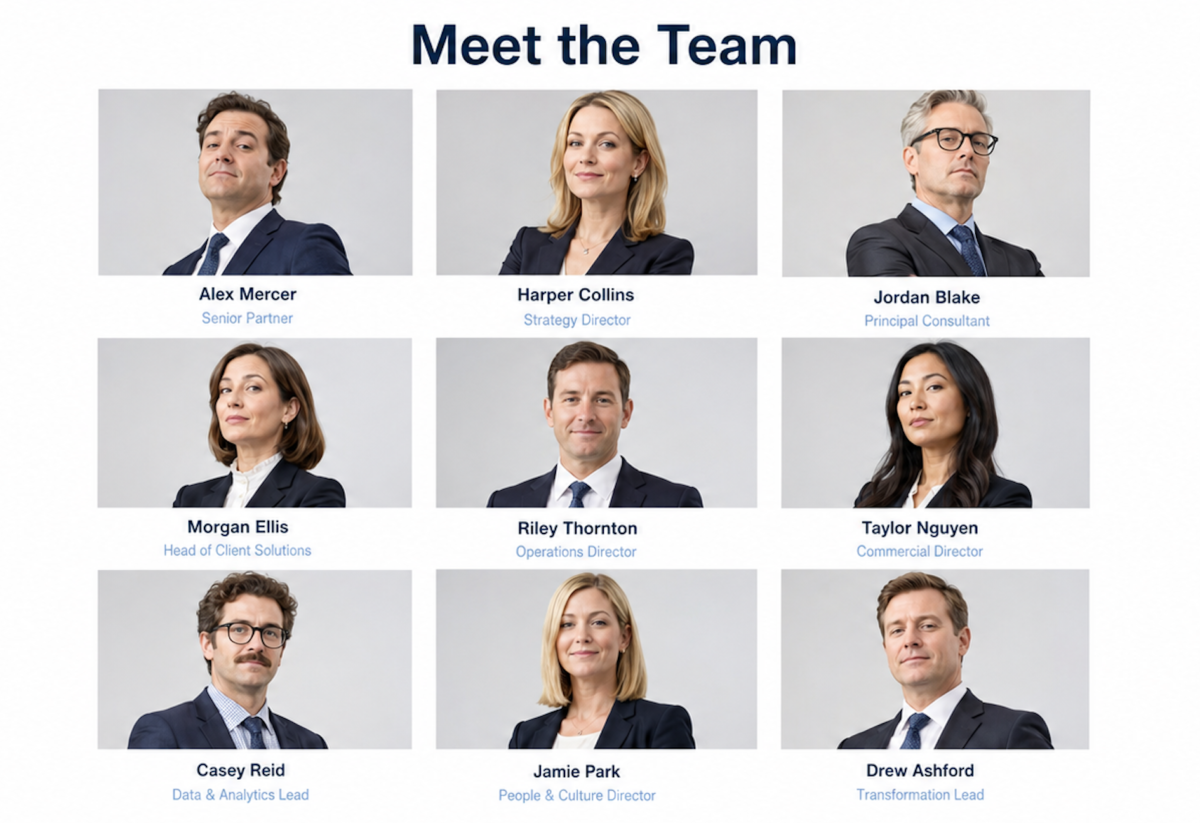
A neat grid of professionally taken headshots. Everyone photographed against the same background, smiling in roughly the same direction.
Under each photograph, there’s a name and an impressive-sounding job title.
But what does any of it tell a potential client?
Not much.
It confirms that these people work for the organisation. You might learn that one of them is a senior partner, another is a consultant and somebody else is Head of Something Important.
But you probably won’t learn what they think, which problems they solve, what they’re like to work with or how they could help you.
It’s little more than a staff poster.
And in a world where people increasingly use search engines and generative AI to find answers to very specific questions, that’s looking badly out of date.
Your potential clients aren’t looking for a biography
Most Meet the Team pages focus on the organisation and its people.
That might sound reasonable. The clue is in the name, after all.
But your potential clients aren’t visiting your website simply to admire your staffing arrangements. They’ve usually arrived with a problem, a question or something they need to get done.
They may want to know how to renegotiate a difficult contract, communicate a complicated change, reduce a particular business risk or solve an issue that has been quietly getting worse for months.
They’re looking for someone who understands that situation.
A conventional biography might tell them where somebody studied, how long they’ve worked in the industry and the string of increasingly senior positions they’ve held.
All perfectly respectable.
But does it show that they understand the problem sitting on the reader’s desk today?
Usually not.
The page still leaves the potential client to make a fairly large leap: this person has a relevant job title, so I suppose they might be able to help me.
It’s still guesswork.
Expertise needs to be demonstrated, not simply claimed
I recently searched online for a solicitor with experience in book publishing contracts.
I didn’t just want any commercial solicitor. I wanted somebody who understood publishing agreements, author royalties, advances, rights and the various costs and obligations that can be tucked inside a contract.
I found lawyers who mentioned publishing among a much longer list of specialisms. I found biographies describing impressive careers and years of experience.
What I struggled to find was somebody answering the questions I actually had.
Imagine if one of those solicitors had written a useful article explaining the clauses authors should examine before signing a publishing agreement. Perhaps they could have covered unnecessary charges, rights you may be signing away or questions worth asking about royalties and future editions.
Better still, they might have included a case study showing how they helped an author challenge an unfavourable term or avoid an expensive mistake.
That would have been far more persuasive than a line saying: “Jane specialises in publishing law.”
One is a claim.
The other lets me see how Jane thinks, what she understands and whether her experience matches my problem.
It also gives search engines and generative AI something useful to work with. Instead of finding only a job title and a general biography, they can find detailed, attributable information connecting a named expert to a specific subject.
That doesn’t guarantee Jane will appear in every AI-generated answer. Nothing does. But it provides much better evidence of her expertise than a photograph and 150 words about her career.
People don’t always enter through the homepage
There’s a common misconception about business websites: everybody arrives through the front door.
We imagine a potential client visiting the homepage, reading the introductory message, clicking on “About us” and then browsing through the services in the order we carefully arranged them.
Real visitors are rarely so considerate.
At Bit Famous, many people first find us through a blog or landing page that answers a particular question about confidence and communication at work.
And these aren’t always broad searches such as “presentation training”.
People may be looking for help with a specific group of colleagues, in a particular workplace, facing a particular communication problem.
That detailed article becomes their front door.
They might never see the homepage before deciding that we understand the issue. They may not visit it at all.
The same applies to content created by your colleagues. A useful article written by one of your experts can become a destination in its own right.
So treat it like one.
Give the reader a relevant next step. Include a contact form. Link to a related service or case study. Where appropriate, give them permission to contact the expert directly.
Don’t make them return to the homepage and begin a small navigation exercise to find out how to speak to somebody.
They’ve found the person who appears to understand their problem. Help them continue that conversation.
Give your experts something useful to say
This doesn’t mean asking every member of staff to write a weekly blog.
That’s the sort of suggestion guaranteed to create a brief flurry of enthusiasm followed by years of awkward silence.
A colleague content strategy can include all sorts of useful material:
- Articles answering the questions clients regularly ask
- Case studies explaining the work somebody delivered
- Testimonials showing the specific value they created
- Podcasts and videos that let people hear their ideas
- Commentary on changes affecting their clients
- Awards, achievements and relevant qualifications
And this content shouldn’t bypass the detail.
A testimonial saying somebody was “great to work with” is pleasant, but not especially useful. What did they actually do? What changed as a result? Did they save the client time, reduce a risk, increase revenue or help a team make a difficult decision?
The same applies to case studies. “We supported a leading organisation with its transformation journey” tells us almost nothing, despite sounding very important.
What was the problem? What did the individual expert notice? What did they recommend? What was the result? How did it help commercially?
That’s the material that demonstrates expertise.
Creating content doesn’t need to become another job
One obvious objection is that your busiest and most experienced people don’t have time to become content creators.
Fair enough.
You don’t want a highly paid lawyer, adviser or consultant staring at a blank document for half a day while wondering how to begin a blog post.
But creating content is much easier than it once was.
A marketing colleague can interview an expert for 20 minutes about a question clients keep asking. That conversation can be recorded, transcribed and shaped into an article, video or podcast.
Dictation tools allow people to capture ideas while they’re fresh. AI can help organise a transcript, identify the main points or produce a first draft.
The expert still needs to check it. Their knowledge, judgement and voice must remain at the centre of the finished piece. Otherwise, you risk publishing the same smooth, vague content that everyone else is producing.
But the expert doesn’t have to do every part of the job.
Marketing teams have a valuable role here. They can spot opportunities, ask good questions, gather evidence and make it easier for colleagues to contribute.
Most organisations already contain a huge amount of useful knowledge. The challenge is getting it out of meetings, inboxes and individual heads and into places where potential clients can find it.
What if your experts become bigger than your business?
Some businesses feel nervous about making individual employees more visible.
What happens if they build a reputation and leave? What if a competitor notices them? What if their personal profile becomes bigger than the company brand?
Those concerns aren’t entirely irrational.
People do move jobs. A visible expert may take some of their reputation and relationships with them.
But hiding your people brings another risk.
If nobody outside the organisation knows what your experts understand, their knowledge contributes very little to your visibility. Potential clients can’t find it. Search engines can’t index it. AI tools have little reason to connect your organisation with the detailed problem somebody is trying to solve.
Your experts may be brilliant. But online, they may be almost invisible.
You’re protecting an asset by keeping it locked in a cupboard.
Businesses need sensible agreements, editorial standards and a clear understanding of who owns and manages company content. But discouraging colleagues from demonstrating their expertise is increasingly self-defeating.
A strong individual profile can strengthen the organisation around it. The expert gains visibility, while the business gains credible, human evidence that it knows what it’s talking about.
Do you still need a Meet the Team page?
Possibly.
A Meet the Team page can still serve a useful corporate purpose.
Job applicants may want to see who leads the business. New starters may find it helpful. Investors, partners and other stakeholders may want to understand the structure of the organisation.
In some industries, showing the people behind the company also provides reassurance. Real photographs and clear biographies can help a business feel more open and human.
So I’m not suggesting you ceremonially delete the page this afternoon.
But don’t expect it to do a job it was never designed to do.
A grid of headshots won’t demonstrate the depth of your organisation’s knowledge. Even linking every photograph to a longer biography may simply create a more elaborate staff directory.
The bigger opportunity sits elsewhere.
Build a colleague content strategy instead
Put your experts’ useful content front and centre.
Publish articles under the names of the people who genuinely know the subject. Connect their profiles to relevant case studies, testimonials, videos and podcasts. Make their specialist knowledge easy to search, understand and verify.
Start with the questions your clients already ask.
What worries them before they contact you? What do they commonly misunderstand? Which decisions are they struggling to make? What should they look out for? What does a good outcome actually involve?
Then identify the people inside your organisation who can answer those questions properly.
You don’t need contributions from everybody at once. Start with a handful of experts, a few important client problems and a realistic publishing rhythm.
One genuinely useful article based on somebody’s experience is worth far more than ten generic biographies filled with words such as “passionate”, “solutions-focused” and “trusted adviser”.
Stop displaying your people and start demonstrating their value
Your colleagues are not interchangeable faces in an organisational grid. They hold knowledge, experience, opinions and practical insight that could help somebody choose your business.
So show it.
Let potential clients see how your people think. Give them useful answers before asking for an enquiry. Show the problems they’ve solved and the value they’ve delivered.
Your Meet the Team page can continue proving that your employees exist.
But your colleague content should explain who can help, what they understand and why somebody should trust them.
Take another look at your current page.
Does it help a potential client solve anything?
Or is it simply a very nicely photographed staff poster?

I help knowledge-based businesses and organisations get strategic about their content, so their ideas are clearer, visible and more likely to generate the right enquiries.
Book a no-obligation discovery call
Read next!

How to gather client testimonials that prove ROI and commercial value
Aug / 2026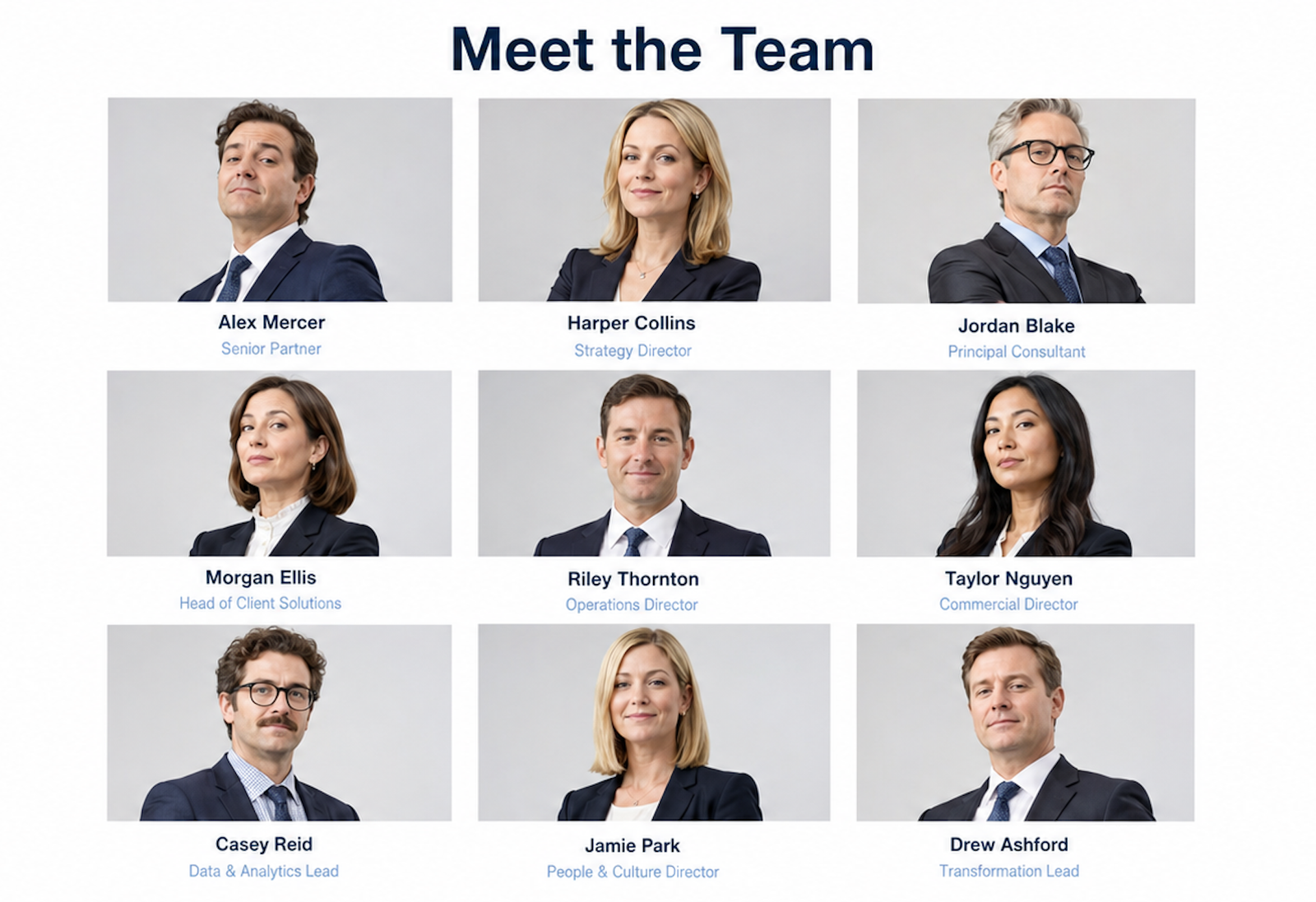
Are meet the team pages pointless? I’d rather meet their expertise
Jul / 2026
Why doesn’t my consultancy website generate business leads? 10 common mistakes
Jul / 2026
How to grow your podcast audience with SEO and expert content so people find you on Google and AI
Jul / 2026
How do I stop guessing what to blog about and choose topics based on customer intent?
May / 2026
Why do potential customers read my blog but not contact me?
May / 2026
Should I use Substack for my business blog? Why it might not be the right solution if you are seeking higher value leads and conversations
May / 2026
Why will social proof like testimonials, case studies and awards help drive more leads and enquiries to my business?
May / 2026